2026-11-12 · Mike Ellison
What Influences Water Damage Restoration Costs in St. Petersburg Flood Zones
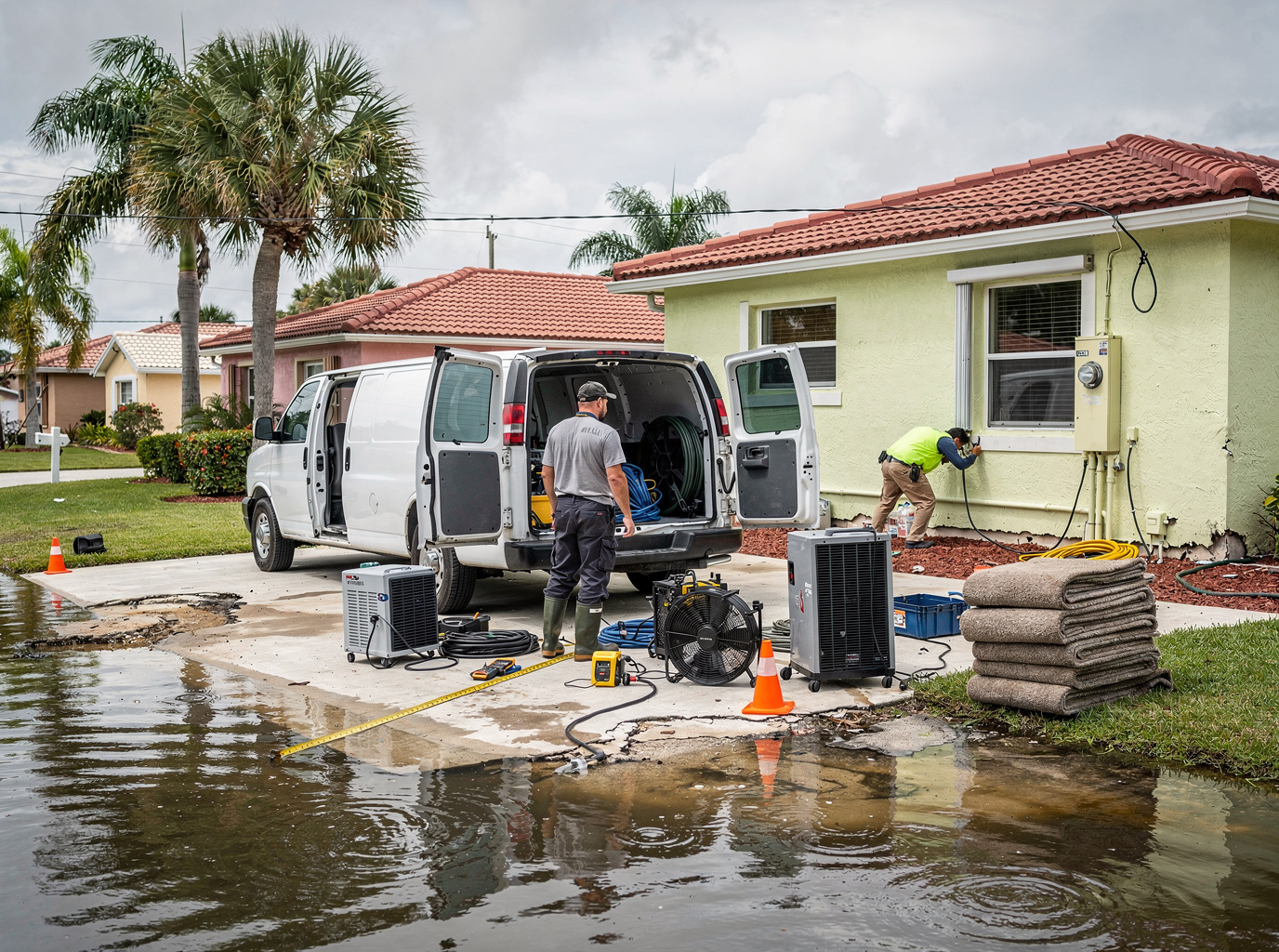
Water damage restoration costs in St. Petersburg flood zones typically range from $3,500 to $12,000 for most residential jobs, driven primarily by flood classification, property age, and the volume of water that enters during storms.
Flood Zone Classifications in Pinellas County
St. Petersburg sits in a mix of AE and VE flood zones along the waterfront and lower-lying blocks near 8th Avenue SE. AE zones require elevated structures yet still see 2–4 feet of water during major events, while VE zones add wave action that forces water into wall cavities and under slab foundations. These classifications dictate the amount of demolition needed before drying can begin. Crews must often remove baseboards and drill weep holes in multiple rooms when water reaches finished flooring in 1960s bungalows common near Gulfport and South Pasadena. Higher flood insurance deductibles in VE zones also push homeowners to request detailed moisture mapping before any Water Damage Restoration work starts.
Housing Stock Age and Construction Details
Many homes in Lealman and Kenneth City date to the 1950s and 1960s with concrete block on slab and minimal vapor barriers. When storm water sits against these slabs for more than 48 hours, moisture migrates into the slab edges and requires specialized drying mats rather than standard air movers. Plaster walls in older Treasure Island cottages absorb water differently than modern drywall, extending drying times by several days. These material differences directly affect labor hours and equipment rental duration, pushing costs upward when crews must switch from extraction wands to negative-pressure drying setups.
Seasonal Rainfall and Hurricane Patterns
Summer thunderstorms and hurricane season from June through November deliver the majority of flood events in the St. Petersburg area. A single 6-inch rainfall event can overwhelm storm drains along 4th Street corridors, sending water into crawl spaces that many Clearwater-adjacent homes still possess. Saltwater intrusion from storm surge requires additional corrosion inhibitors during the drying phase because residual chlorides accelerate mold on wood framing. Homeowners who review the linked guide on Preparing St. Petersburg Homes for Hurricane Season Flood Risks often schedule pre-season inspections that reduce emergency call-out fees during actual events.
Extraction Volume and Hidden Moisture Detection
The cubic footage of water that enters determines whether standard truck-mounted extractors suffice or whether subfloor drying systems become necessary. In flood zones near Madeira Beach, water frequently travels under tile through grout lines, requiring infrared cameras to locate pockets that standard meters miss. When hidden moisture exceeds 18 percent in subfloor plywood, replacement rather than drying becomes the cost driver. Linking to How to Identify Hidden Water Damage After Summer Storms in Pinellas County helps residents understand why moisture logs must be kept for insurance documentation.
Drying Equipment Runtime and Monitoring
Equipment runtimes in St. Petersburg humidity often stretch 5–7 days because ambient moisture levels remain above 70 percent even after extraction. Daily moisture readings logged at multiple depths in walls and floors guide decisions on whether to extend drying or proceed to antimicrobial application. Homes in low-lying sections of Pinellas Park may need dehumidifiers rated for 70-pint daily removal rather than residential 30-pint units, adding to daily equipment charges. These monitoring steps ensure that restoration meets the specific conditions created by local flood-zone realities rather than generic timelines.