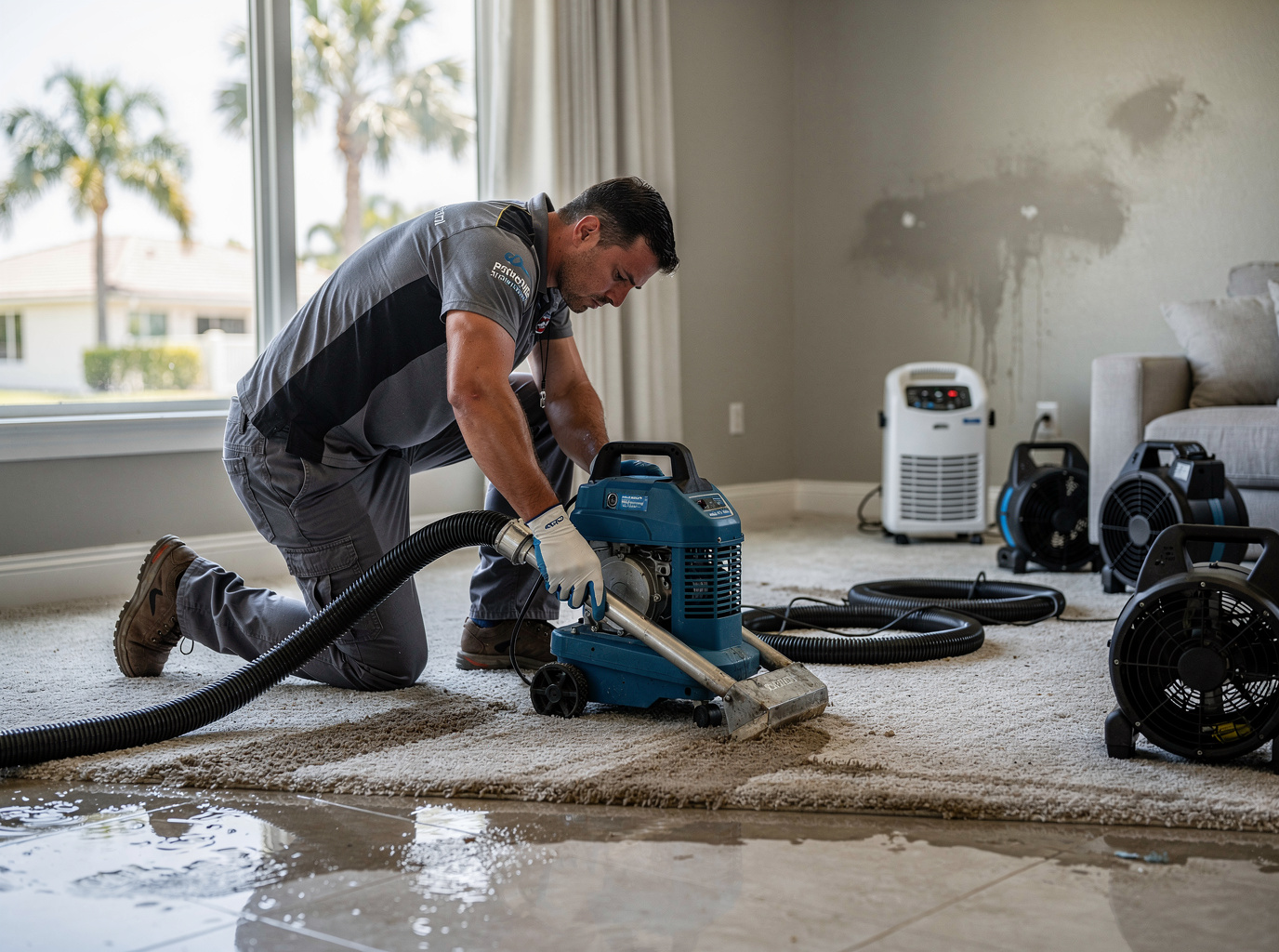
St. Petersburg's older housing stock, including 1920s bungalows in Old Northeast and masonry homes near downtown, often features plaster walls and raised foundations that trap moisture after leaks or storm flooding. Water migrates quickly through stucco and into crawl spaces common in the area, requiring targeted demolition and dehumidification to prevent hidden growth. High local humidity accelerates secondary damage, so crews monitor moisture levels in multiple materials rather than relying on surface drying alone.
Storm surge and heavy rain events typical in the St. Petersburg area push water into slab-on-grade homes in areas like Gulfport and South Pasadena, where tile and subfloor delamination occurs rapidly. Technicians remove baseboards and drill weep holes in affected walls to allow airflow, then use industrial air movers positioned for cross-ventilation that accounts for the region's consistent sea breezes. Edge cases include hidden plumbing leaks in multi-story properties along Central Avenue, where water travels between floors through chaseways.
Pinellas County building practices and older electrical systems mean water intrusion near panels requires immediate isolation before drying begins. Restoration focuses on returning homes to pre-loss condition without unnecessary removal of original woodwork found in historic districts. Crews document every step with photos and moisture readings so homeowners can verify the work meets local standards for insurance claims.
Technician insight
In St. Petersburg, the thing that catches most people out with water damage restoration is how fast mold takes hold in the older plaster walls and tight crawl spaces once humidity spikes after a storm. Homeowners often try fans alone, but without proper dehumidification the moisture just moves deeper into the slab or between floors in those 1920s bungalows around Old Northeast.
Crawl Space Flood After Summer Storm
Water entered a 1940s home in the Old Northeast neighborhood through foundation vents during heavy rain. Inspection showed saturation in the subfloor and insulation. Crews extracted water, installed drying equipment with targeted airflow under the house, and treated surfaces to stop growth. The home dried within five days without removal of original hardwood floors.
Water Damage Restoration Services We Offer
✓Emergency Water Extraction
Rapid removal of standing water from floors and carpets using truck-mounted pumps suited for St. Petersburg's frequent summer storms.
✓Structural Drying and Dehumidification
Placement of commercial dehumidifiers and air movers to pull moisture from plaster, drywall, and subfloors common in Pinellas County homes.
✓Mold Prevention After Water Damage
Application of EPA-registered antimicrobials on affected surfaces to stop growth accelerated by the area's high humidity levels.
✓Basement and Crawl Space Drying
Targeted drying of below-grade spaces found in older St. Petersburg neighborhoods where water collects after heavy rains.
✓Contents Cleaning and Restoration
Cleaning and drying of furniture, documents, and personal items affected by leaks in downtown apartments and single-family homes.
Water Damage Restoration Cost in St. Petersburg, FL
| Service | Typical Range | What Affects It |
|---|---|---|
| Water Extraction | $350–$900 | Varies with volume and access in older homes with crawl spaces. |
| Full Structural Drying | $800–$2,200 | Depends on number of rooms and humidity levels during summer months. |
| Mold Prevention Treatment | $250–$600 | Added when moisture has been present more than 48 hours. |
| Contents Pack-Out And Cleaning | $400–$1,500 | Based on quantity and type of items in multi-story properties. |
Ranges are typical for St. Petersburg, FL and confirmed with an exact written quote before any work starts.
How it works
- 1
Inspection And Moisture Mapping
Technicians locate all affected materials using meters and infrared cameras, noting water migration paths typical in St. Petersburg's older construction.
- 2
Water Removal
Standing water is extracted with pumps and wands before secondary damage sets in during humid conditions.
- 3
Drying And Monitoring
Equipment runs with daily moisture checks until readings return to normal levels for the local climate.
- 4
Final Cleaning And Documentation
Sanitization of surfaces followed by a report for insurance or homeowner records.
Pricing
Upfront quotes after inspection; final cost depends on square footage, materials affected, and drying time required in humid St. Petersburg conditions.