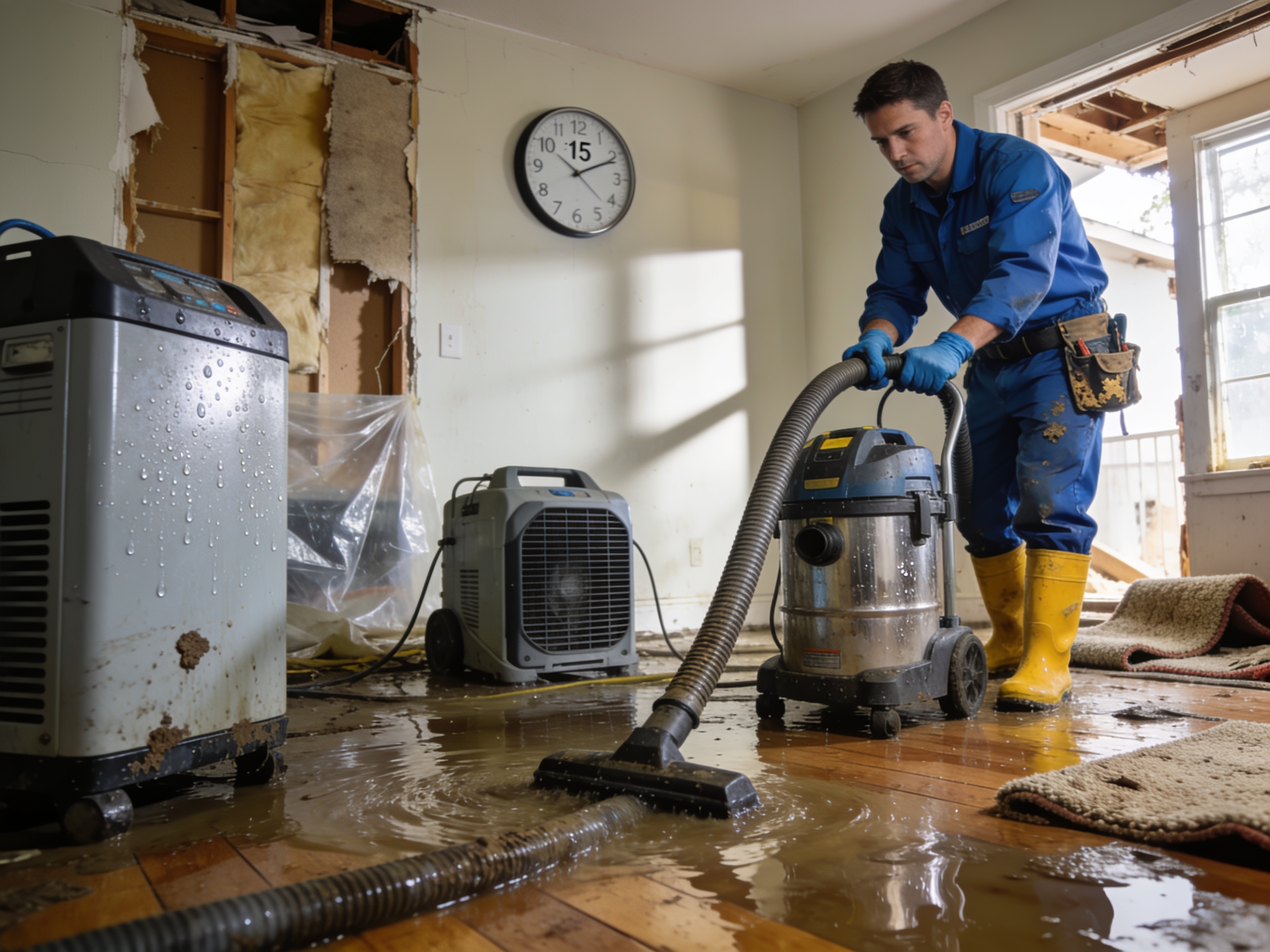
St. Petersburg's older housing stock, especially bungalows and mid-century homes in neighborhoods like Old Northeast and Historic Kenwood, often features plaster walls and slab foundations that trap moisture after leaks or storm flooding. Emergency water removal must address both standing water and hidden saturation in these materials before mold sets in during the area's humid summers and frequent tropical downpours. Technicians use truck-mounted extractors and moisture meters to pull water from subfloors and wall cavities without unnecessary demolition.
Pinellas County's high water table and sandy soils allow water from burst pipes or roof leaks to migrate quickly under slabs and into crawlspaces common in Snell Isle and Downtown properties. Delaying extraction even 24 hours can push moisture into adjacent units or shared walls in older apartment conversions. Crews prioritize perimeter drainage and negative air setups to contain the job and protect neighboring homes during removal.
After major rain events, St. Petersburg properties near Booker Creek or the waterfront often see category 2 or 3 water intrusion from street flooding. Emergency removal includes separating salvageable contents, removing saturated carpet pads, and documenting moisture levels room by room for insurance adjusters. This approach prevents secondary damage that would otherwise require full gutting of kitchens and bathrooms built with particleboard cabinets typical in local construction.
Technician insight
In St. Petersburg the thing that catches most people out with Emergency Water Removal is how fast water travels under the sandy soil and slab foundations common in Pinellas County homes built before 1970. Homeowners often think once the floor is dry the job is done, but moisture left in the perimeter beam or behind plaster can trigger mold within days during our humid season.
Old Northeast Bungalow After Pipe Burst
A kitchen supply line failed overnight in a 1950s bungalow near Coffee Pot Bayou. Water migrated under the slab and into the adjacent bathroom. Extraction removed standing water from both rooms and moisture readings guided drying of the subfloor. The home was returned to normal moisture levels within four days without opening walls.
Emergency Water Removal Services We Offer
✓Flooded Basement Extraction
Removes standing water from below-grade spaces common in older St. Petersburg homes and prevents further migration into electrical systems or HVAC ducts.
✓Storm Surge Water Removal
Handles saltwater intrusion from hurricanes and tropical storms that affect waterfront neighborhoods and accelerates corrosion on metal framing.
✓Burst Pipe Emergency Extraction
Targets sudden plumbing failures in historic plaster walls and slab homes where water spreads rapidly through sandy soil under foundations.
✓Appliance Leak Water Removal
Extracts water from refrigerator, washer, or water heater failures before it reaches adjacent rooms or subflooring in compact St. Petersburg floor plans.
✓Sewage Backup Cleanup
Removes contaminated water from municipal line backups that occur after heavy rains in older sections of Pinellas County.
Emergency Water Removal Cost in St. Petersburg, FL
| Service | Typical Range | What Affects It |
|---|---|---|
| Initial emergency extraction visit | $350–$850 | Varies with volume of water and time of day in St. Petersburg |
| Per square foot extraction and drying | $4–$9 | Higher for category 3 water or slab homes with hidden migration |
| Content moving and protection | $150–$400 | Depends on number of rooms and item types |
Ranges are typical for St. Petersburg, FL and confirmed with an exact written quote before any work starts.
How it works
- 1
Arrival And Safety Assessment
Technicians arrive at the St. Petersburg address, shut off water sources, and evaluate electrical hazards before any extraction begins.
- 2
Standing Water Extraction
Truck-mounted pumps and portable extractors remove bulk water from floors, carpets, and low-lying areas while containing runoff.
- 3
Moisture Mapping And Targeted Removal
Infrared cameras and meters locate hidden moisture in walls and under slabs typical of local construction for precise drying.
- 4
Content Protection And Documentation
Salvageable items are moved or protected and moisture readings are recorded for insurance claims common in the area.
Pricing
Costs depend on water category, affected square footage, and whether hidden moisture in older construction requires additional wall or floor access.