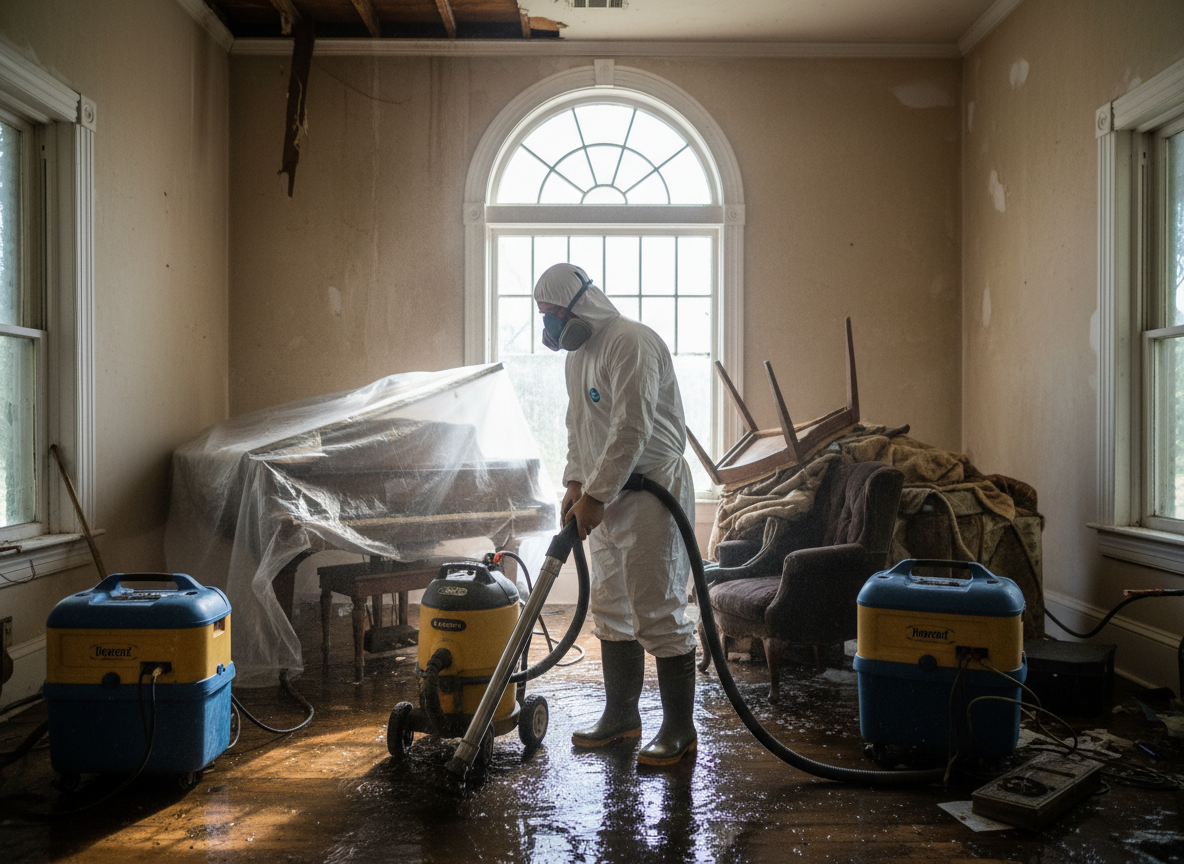
St. Petersburg homes built before 1960 in neighborhoods like Old Northeast and Kenwood often feature plaster walls and crawl spaces that trap moisture after even moderate rain events. Afternoon thunderstorms common from June through September can overwhelm older roof drains and gutters, sending water into attics and walls. Our crews use moisture meters and thermal imaging to locate hidden saturation before mold sets in, especially important in Pinellas County’s high humidity where materials stay damp longer than in drier climates.
Water from Tampa Bay storm surges or sewage backups requires different handling than clean roof leaks. We separate affected zones, use negative air machines to contain contaminants, and apply EPA-registered antimicrobials on wood framing and concrete slabs typical in St. Petersburg construction. Flooring removal decisions depend on whether the home has original hardwood or post-1980 carpet pad; both can wick water into subfloors if extraction is delayed more than 24 hours.
After extraction, we place commercial dehumidifiers and air movers sized for the square footage and monitor daily until readings drop below 12 percent moisture content. This prevents secondary damage to electrical boxes and insulation common in 1940s–1950s bungalows. Final clearance includes checking behind baseboards and inside HVAC returns, areas homeowners often miss.
Technician insight
In St. Petersburg the thing that catches most people out with water damage cleanup is how quickly plaster walls and old lathe in pre-1950 homes hold moisture behind the surface; if you don’t pull baseboards and check the cavities the first day, you’ll be back in two weeks when the humidity spikes again after another afternoon storm.
Kenwood Bungalow After Roof Leak
Water from a clogged gutter during a July thunderstorm entered the attic of a 1948 bungalow and soaked insulation above the living room. We removed saturated material, dried the rafters and ceiling joists, and confirmed moisture levels stayed low after three days of equipment use.
Water Damage Cleanup Services We Offer
✓Emergency Water Extraction
Rapid removal of standing water from floors and carpets using truck-mounted pumps to limit further absorption into St. Petersburg’s older subfloors.
✓Structural Drying
Placement of industrial dehumidifiers and air movers to dry wall cavities and framing after leaks or storms common in Pinellas County.
✓Crawl Space Water Cleanup
Pumping and drying of moisture trapped under homes in Kenwood and Historic Uptown where poor drainage leads to repeated saturation.
✓Sewage Backup Remediation
Safe removal and sanitization of contaminated water from toilets or main lines affecting bathrooms in older St. Petersburg properties.
✓Attic Insulation Removal
Extraction of wet insulation and drying of roof decking after roof leaks during hurricane season.
Water Damage Cleanup Cost in St. Petersburg, FL
| Service | Typical Range | What Affects It |
|---|---|---|
| Initial Assessment and Extraction | $250–$600 | Varies with water depth and number of rooms. |
| Daily Drying Equipment | $150–$350 | Per day; number of days depends on material type and humidity. |
| Crawl Space or Attic Drying | $400–$900 | Higher when insulation removal or limited access is required. |
| Sewage Contamination Cleanup | $600–$1,200 | Includes containment and disposal of affected materials. |
Ranges are typical for St. Petersburg, FL and confirmed with an exact written quote before any work starts.
How it works
- 1
Site Assessment
Technicians inspect all affected rooms, measure moisture levels in walls and floors, and document the source of water.
- 2
Water Removal
Standing water is extracted with pumps and wands, then absorbent materials are removed to prevent further wicking.
- 3
Drying and Monitoring
Equipment is positioned and humidity is tracked daily until materials reach safe moisture content.
- 4
Sanitizing and Clearance
Surfaces are treated and final readings confirm the space is dry before any rebuild work begins.
Pricing
Costs depend on water category, square footage affected, and how quickly drying can begin.